An interactive experience in the clinic where you learn to regulate brain activity associated with your Depression or PTSD.
If you are living with Depression or PTSD, there is a way Back to Better.
Prism is now available at Associates for Behavioral Medicine where you discover your own personal way to regulate brain activity associated with your mental health condition.
Request an Appointment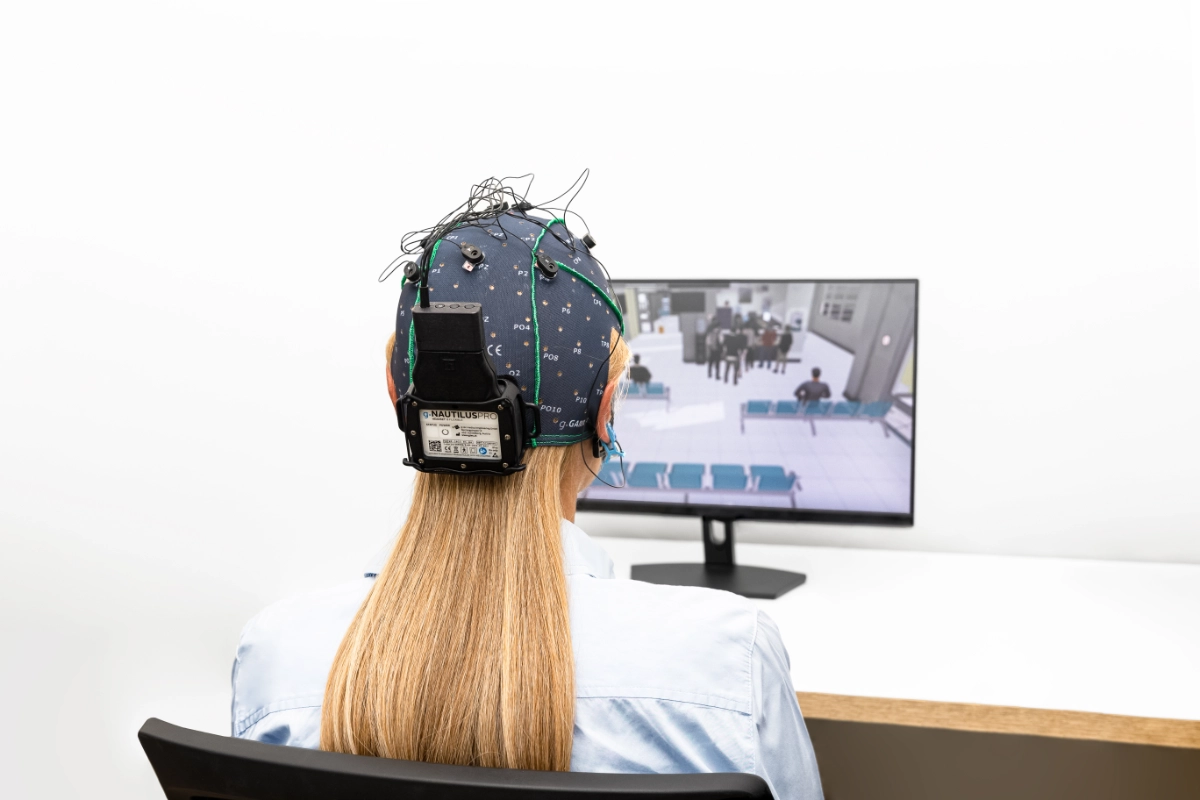
Prism is a completely different type of therapy, called self-neuromodulation. Self – because you are in the driver’s seat, expertly guided by your trusted healthcare professional and Prism. Modulation – because you are actively learning to regulate a digital biomarker that mirrors brain activity associated with your symptoms. This is personalized and interactive!
During a Prism session, you will sit in a quiet room in front of a computer monitor. You will be fitted with a soft, fabric EEG cap with small sensors, which measure brain activity, like a fitness wearable measures your heart rate.
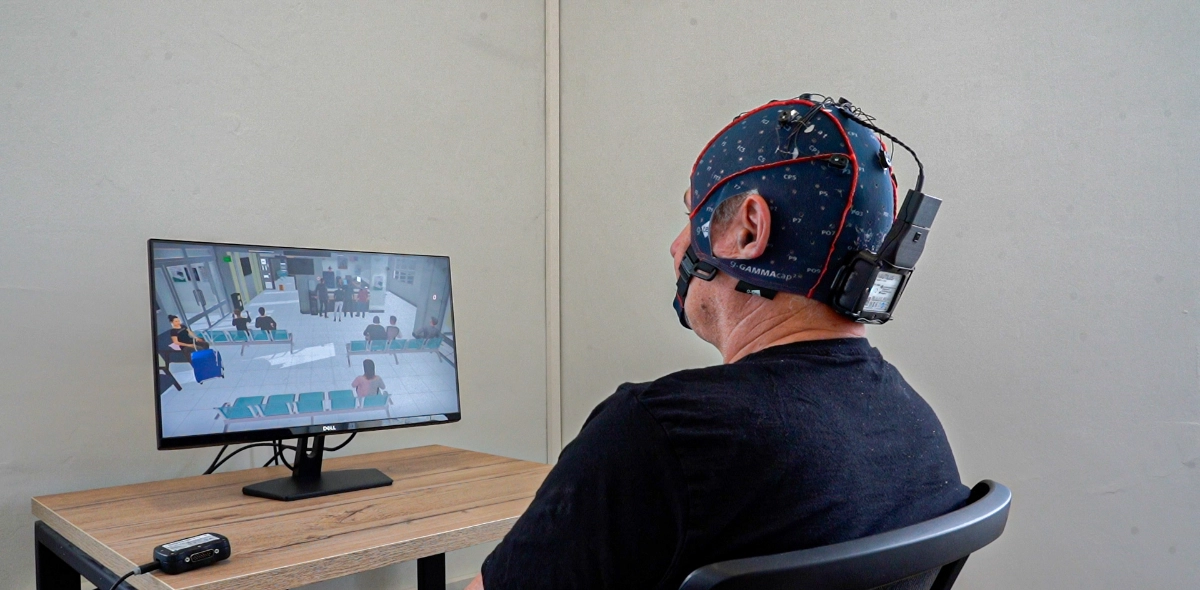
You will watch a computer simulation designed specifically for Depression or PTSD. For PTSD, there are animated characters standing up and speaking in loud voices in a waiting room, while for Depression, a dog wants his owner to take him for a walk or other activities. You will interact with the simulation by exploring your own personal mental strategy – a personal memory, emotion or experience. For PTSD, a mental strategy may be something that makes you feel calm and safe. For Depression, it may be something that makes you feel joy or motivation.
This is where Prism’s advanced technology meets the patients. Prism reads the signal from the sensors on the EEG cap and computes the amygdala-based biomarker for PTSD or the reward system biomarker for Depression. These digital biomarkers were developed by applying machine learning models to register fMRI data from deep in the brain to EEG. That means the system ‘sees’ your brain activity without having to have an MRI.
The simulation acts like a mirror to your specific brain activity, displaying your progress. As you engage in a mental strategy that changes the level of the biomarker, the animated characters respond. For Depression, the animated character will take her dog for an activity and for PTSD, the animated characters will gradually sit, stay seated and lower their voices. Since there is no single mental strategy that works for everyone, you will have an opportunity to discover what works just for you!
Prism guides you on a journey to uncover your own personal memory or experience that holds the power to help you take control. You will come to the clinic (10 sessions for Depression and 15 sessions for PTSD) and continue to practice your mental strategy in daily life. Patients share that this mental strategy can become second nature, automatic and available to you when you need it.
The results of the PTSD clinical study showed 67% of patients overall demonstrated clinically significant PTSD symptom improvement, including sleep. The results of the Depression pilot study demonstrated reduction in depressive symptoms in 78% of participants with a large effect size on anhedonia symptoms. A majority of the reported adverse events were mild, such as fatigue and headaches, and self-resolved after the session.